Filmed in 1966 on the American Folk Blues Festival tour
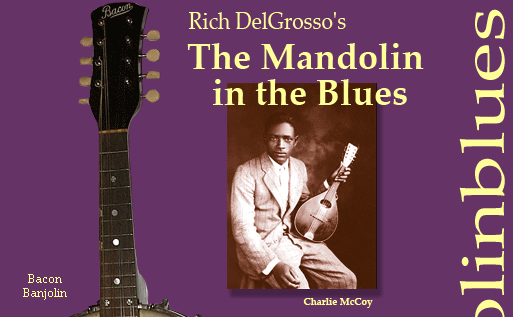
featuring Sleepy John Estes (guitar & vocal), accompanied by Yank Rachel (mandolin). Mandolin Blues “They were led by a long-legged chocolate boy and their band These are words of W.C. Handy, band-leader and composer, describing one of his first encounters with the “blues" in 1905. At that moment in time his band was playing a dance in Cleveland, Mississippi, when he was handed a request for "our native music". The band played an old-time Southern melody, but was then asked if a local band could play a few numbers. The enthusiastic response to the trio's music gave Handy pause. In his time in MIssissippi he surrounded himself with the music and started writing. For this work he is regarded as the "Father of the Blues." My inspiration is the story of the black mandolinist in America. In the hands of the black string band performers, the mandolin was there to nurture the infancy of ragtime and blues. It’s crisp, tenor voice was a perfect complement to the guitar and piano and its soaring tremolos energized the jug and street bands of the Deep South. An inspiration to composers Scott Joplin and W.C. Handy, the mandolin helped to shape the music that would gradually evolve into rock and jazz and their descendants. At this point in the American timeline, Memphis, Tennessee, was the center of African-American culture and the crossroads for touring musicians. Players like Vol Stevens, Will Weldon, Eddie Dimmitt and Charlie McCoy added their string band skills to some of the bands of the day, like the Memphis Jug Band and the Mississippi Sheiks. From these collaborations came some of the popular blues/folk/bluegrass chestnuts like “Sittin’ On Top Of The World” and “Stealin.” Most people know of the legendary Chicago bluesman Muddy Waters. But only his hard-core fans are aware that on his first recording on Stovall plantation in Mississippi, Burr Clover Blues, Waters was a member of a string band, the Son Simms Four, with Simms on fiddle and Louis Ford on mandolin. In the surrounding countryside other musicians and bands flourished. W.Howard Armstrong and Carl Martin and their Tennessee Chocolate Drops performed for medicine shows,parties and fish fries. Yank Rachell traveled about, playing the deep blues with his guitar partner Sleepy John Estes. Young Bill Monroe played guitar with a black fiddler named Arnold Schultz. Monroe then took the fiddle music of his Uncle Penn and the blues from Schultz and blended them together on the mandolin, creating a new American genre that came to be known as bluegrass.
|
|
 |
 |
|||||||||||||||||
 |
 |
 |
|
|||||||||||||||
 |
|
|||||||||||||||||
 |
 |
|
||||||||||||||||
 |
|
|||||||||||||||||
 |
 |
 |
|
|||||||||||||||
 |
|
|||||||||||||||||
 |
 |
 |
|
|||||||||||||||
 |
 |
 |
|
|||||||||||||||
 |
|
|||||||||||||||||
 |
 |
 |
|
|||||||||||||||
 |
|
|||||||||||||||||
 |
 |
|
||||||||||||||||
 |
|
|||||||||||||||||
 |
 |
 |
|
|||||||||||||||
 |
|
|||||||||||||||||
 |
 |
 |
|
|||||||||||||||
 |
|
|||||||||||||||||
 |
 |
 |
|
|||||||||||||||
 |
|
|||||||||||||||||
 |
|
|||||||||||||||||
 |
 |
|
||||||||||||||||
 |
|
|||||||||||||||||
|
|
|
|
|
|
|
|
|
|
|
|
|
|
|
|
|
|
|

Rare Johnny "fat Mandolina" Young footage in Paris 30/11/1972 Salle Pleyel, Paris (American Folk Blues Festival), from the documentary "And This Is Free." Thank you Lighnin Chris for posting it on YT and to Rene for alerting me.As blacks migrated north to escape the social oppression and poverty of the South, the musicians were among the throngs settling in Chicago, St. Louis, New York and Detroit. The players from Memphis and Mississippi traveled due north to Chicago, and Handy’s Park in Memphis was replaced by the Maxwell Street market as the street-scene-center for the blues folks. Carl Martin and Johnny Young were often seen playing the mandolin with the harmonica and guitar players of Chicago’s Southside. Young often played electric mandolin with Muddy Waters and piano great Otis Spann. Waters had relocated to Chicago, where he popularized the electrified blues combo sound, which was copied by embryonic rockers both in the States and the UK. Blues Rock fans are aware that the greatest rock and roll band, the Rolling Stones, started as a blues band playing “old school” blues covers. Brian Jones, Mick Jagger and Keith Richards were aware of their roots. They asked Ry Cooder to play Yank Rachell-style mandolin licks on their early cover of Robert Johnson’s “Love in Vain (Let It Bleed, London Records nps-4).” As more players pick up the mandolin, interest in the work of these seminal artists is growing. In the hands of Ry Cooder, Steve James, Andra Fay, Billy Flynn and others mandolin blues lives today. Everywhere I go people comment on the sound of my playing or on my writing for Mandolin Magazine. They want to know where it comes from.
And so the story begins……… |
|